
volcanic cone skylight - Waitematā Station
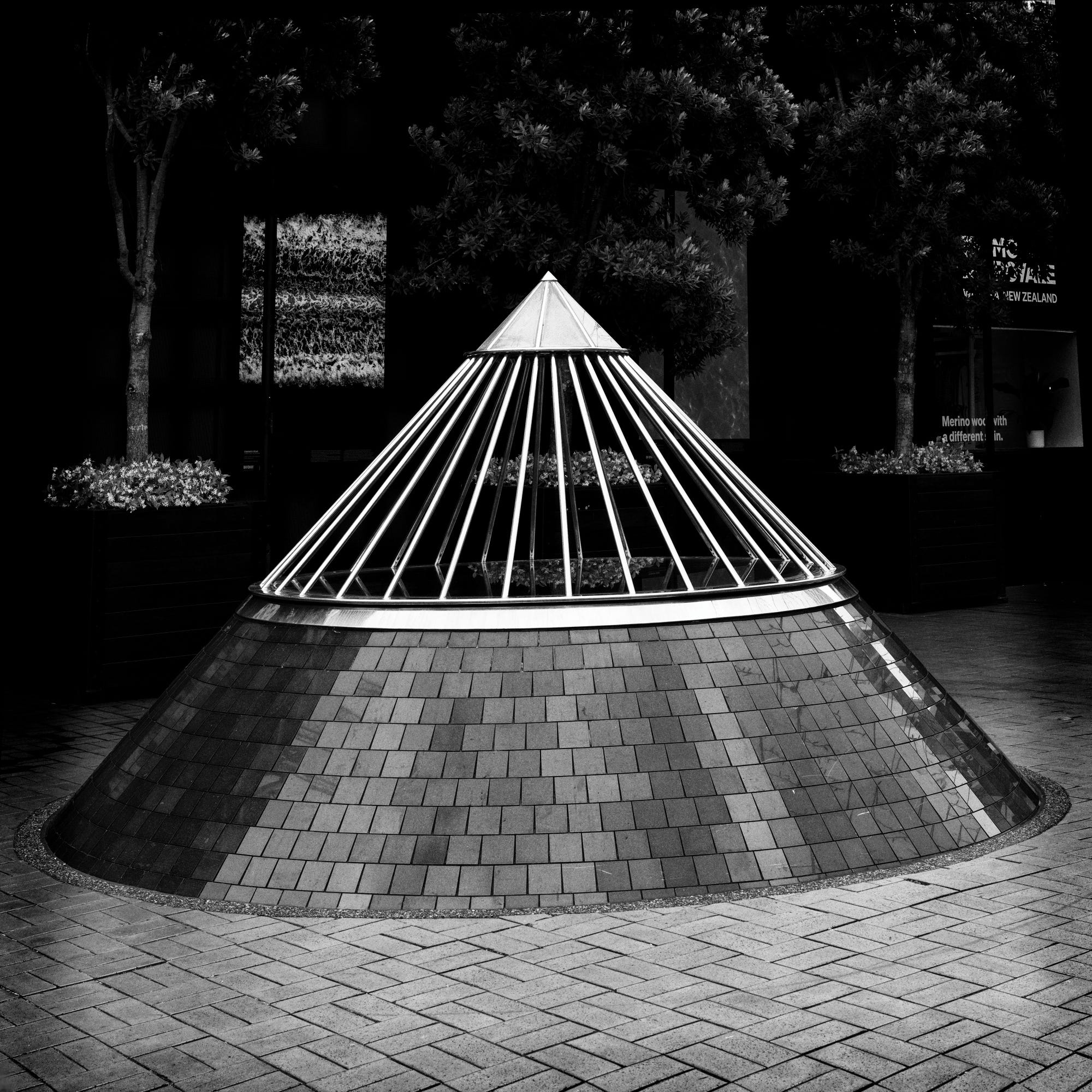
To my eye, there are few topographical features across the Auckland region that are more striking and defining than its volcanic field. More than 50 volcanoes impose an astonishing visual imprint on Auckland’s natural landscape.
For four years my family and I lived within visual and walking proximity of one such volcano known as Maungakiekie. The maunga [mountain] dominated the northwestern skyline from the vantage point of our rental home on Campbell Road in the suburb of One Tree Hill.
Further afield, one cannot travel across the suburbs of central Auckland without feeling the geological weight of Auckland’s volcanic array. And for Māori, the historical significance of the mountains — for secure settlement sites and farming — is only magnified by the sacred stature that Māori accord to the geological wonders of Auckland’s volcanic field.
Which brings me to the subject of today’s photographic entry: one of the architectural skylights of an array that bathe with light the underground train platforms of Waitematā (originally named Britomart) Station in city-centre Auckland. In the waning years of the 20th century, as architects thought about design themes for the construction of underground train platforms within Britomart Train Station, they designed the skylights to mimic the form of volcanic cones.
The skylights extend beyond the confines of underground ceiling onto to the walkway above the train station, expressing themselves on the sidewalks as the upper portions of those volcanic cones.
I should note here that the other volcanic cone skylights within the array do not have the ornamental metal peak that is featured in today’s photograph. They have flat glass tops, as pictured here, that more faithfully resemble in form the upper portion of Auckland’s volcanoes. The design firm Jasmax was a co-partner for the architectural design of the train station.
The skylight array is a wonderful example of how creative architects successfully integrate architectural elements, like volcanic-shaped skylights, into the design of public buildings to express in visual language the contours of the natural landscape in which those buildings will reside.
I use the term ‘monumental’ public architecture to describe exemplary instances of that visual integration. The term is not meant to imply outsized projects; rather it celebrates design that elevates architecture to local but lofty expressions of distinctive place-defining visual form. It is architecture that speaks to the possibility (and realisation) of intimate connections between the natural and built environments, connections that stimulate and nurture our palpable sense of place.
Waitematā Station is one of many examples within Auckland of monumental public architecture.
As a final note: from his toddler years onward, my grandson gauged the development of his height, strength and agility by his increasing ability to scale the wall of a cone along the Britomart precinct sidewalk. It was a triumphant day when he successfully scaled a cone’s tiled face and could sit atop the cone on its glass summit.
Here I thought aliens had landed in NZ.... Volcanoes?