
The Cargill Monument - Dunedin
May the descendants of Captain William Cargill forgive me - I have elected to forego an exploration of Capatin Cargill’s legacy. For those Substack patrons who wish to learn about Captain Cargill, you may enjoy reading a biographical sketch found here.
I wish instead to focus on the monument itself.
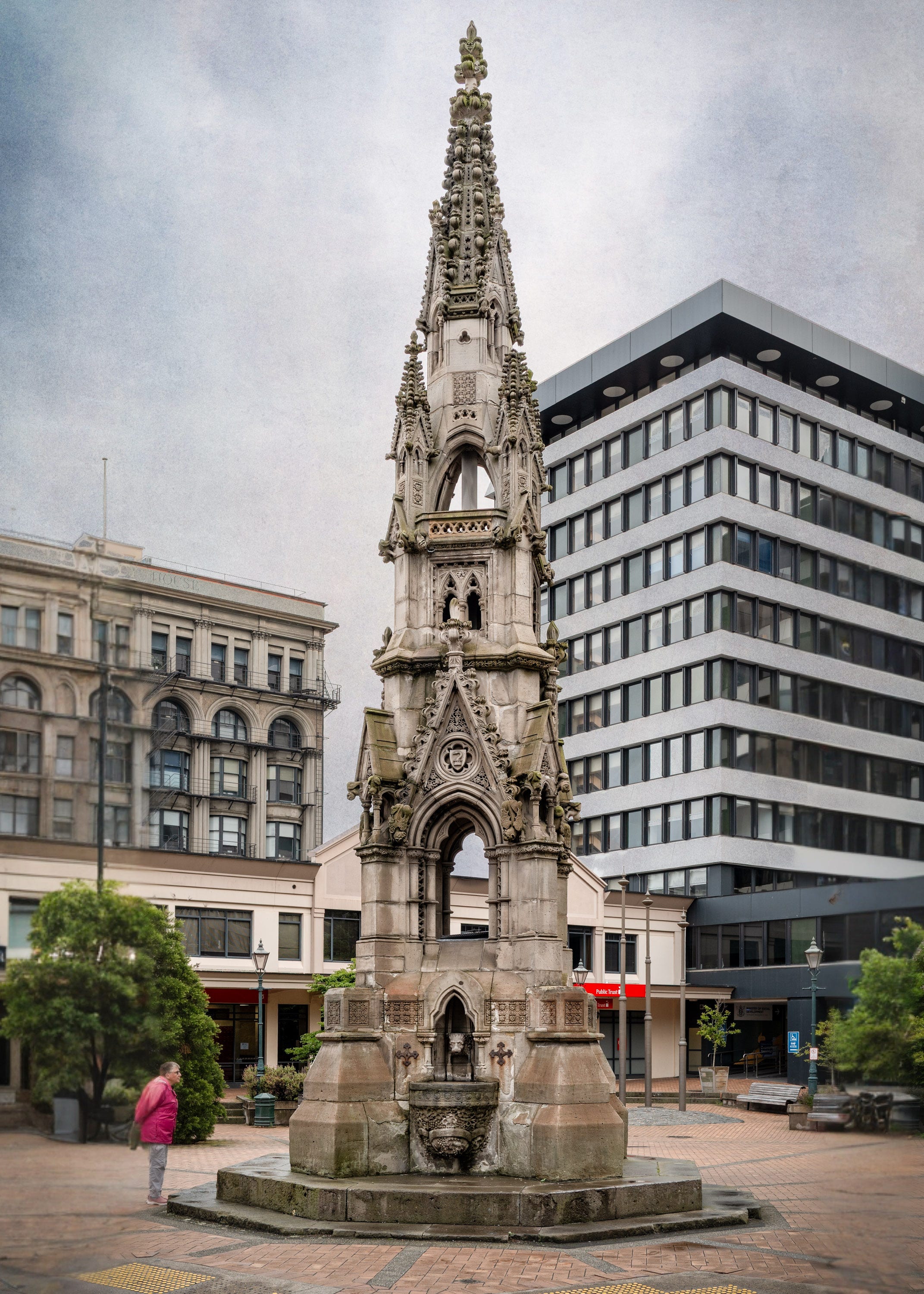
The Cargill Monument was designed by Charles Robert Swyer. It was built between 1863 and 1864. The monument is made from Tasmanian sandstone, resting on a base of local stone called phonolite. The monument stands about 7.5 meters (25 feet) tall.
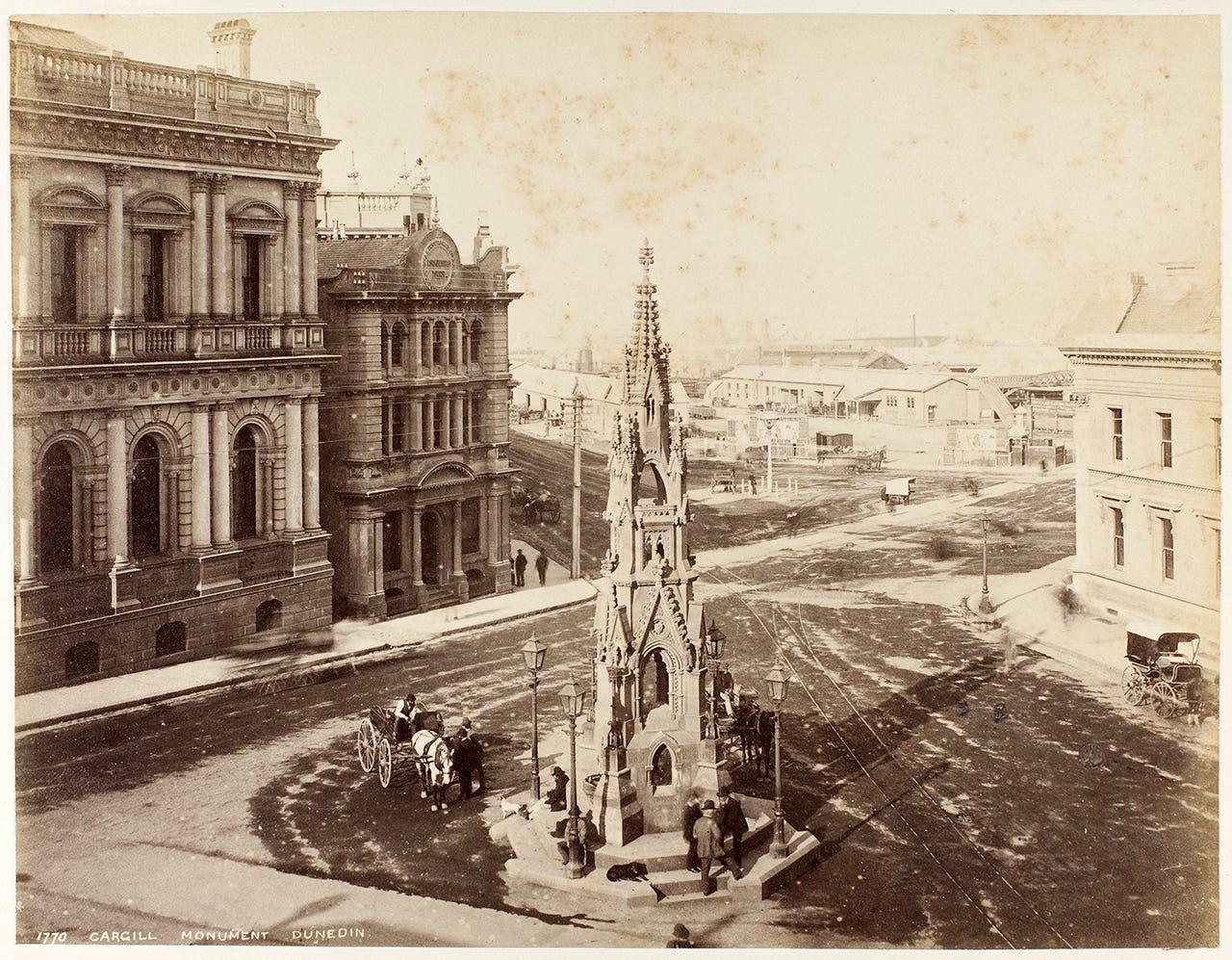
Although no longer in place, four lamps originally mounted at the edges of the monument’s podium illuminated the landmark and surrounding area of the city-centre street, as illustrated below in a heritage photograph.
Of the monument’s lineage, both architectural and historical, an entry in Heritage New Zealand notes:
Cargill’s Monument, completed in 1864, is a Gothic Revival masterpiece standing at what was once the centre of the Dunedin business district in the late 1800s in the area that was originally known as Custom House Square, now known as the Exchange, at the intersection of Princes and Rattray Streets. The monument, of architectural, aesthetic and historic significance, was built in memory of Captain William Cargill (1784-1860) who, along with the Reverend Thomas Burns (1796?-1871), was the leader of the Otago settlement. It is situated close to the landing site of the waka Arai Te Uru and the location where Cargill had arrived with the first settlers of the Free Church settlement on the John Wickliffe on 23 March 1848.1
From its initial reception onward, the monument has been celebrated, villified, admired and vandalised. Representative of the halting regard for the structure is a newspaper editorial from the time of the monument’s completion (circa 1864), which administered a mixture of faint praise and scathing judgment:
‘The design seemed very pretty, but now that it is erected, one shudders at its ill taste …it is an insult to the memory of Cargill that such a trumpery insubstantial-looking thing should be considered a fitting recognition of his services. 2
The commerative edifice has had in recent years a revival in its stature as an object of civic pride and plans are afoot to restore the monument to its once elegant beauty.
Cargill’s Monument | Heritage New Zealand
< https://www.heritage.org.nz/list-details/4754/Cargill-s-Monument >
Cargill’s Monument | Heritage New Zealand
< https://www.heritage.org.nz/list-details/4754/Cargill-s-Monument >