
Khartoum Place - a visual movement
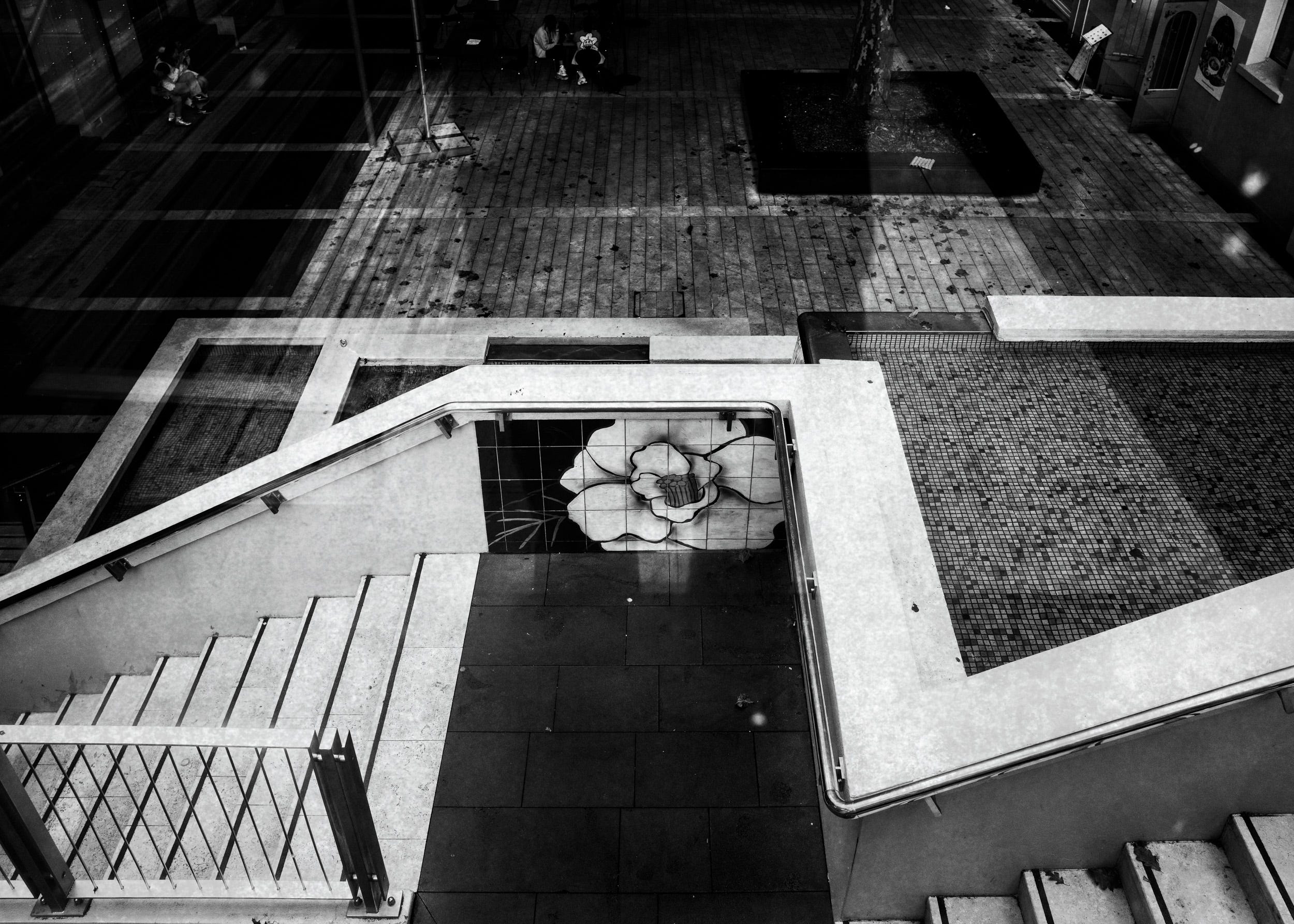
New Zealand was the first self-governing country to grant women the right to vote in national elections. It did so by act of parliament in 1893.
Khartoum Place in Auckland Central memorialises this momentous moment in the worldwide suffrage movement, which took root in the 19th century, to expand the Enlightenment ideal of political equality by extending full political agency to New Zealand women.
A different form of movement — a visual movement — capivated me as I approached the plaza from the Auckland Art Gallery. I had been reflecting on my study of an Hungarian born photographer, Gyula Halász, who as an expatriate living in Paris produced a portfolio of stunning black & white photographs of Paris at night and published them under the pseudonym Brassaï.
Brassaï’s oeuvre is hauntingly beautiful, each print an evocative play of form, line and light. The finest black & white photographs — think of Ansel Adam’s images — exploit the full range of the gray scale, from pure black to pure white. Brassaï’s photographs are marked by spectacular washes of light, shadow and granular texture, all impeccably composed.
If imitation is a high form of flattery, then my humble attempt here should be understood to be a modest but sincere nod to Brassaï’s photographic legacy.